Maap
A wall of light by Erwan Bouroullec
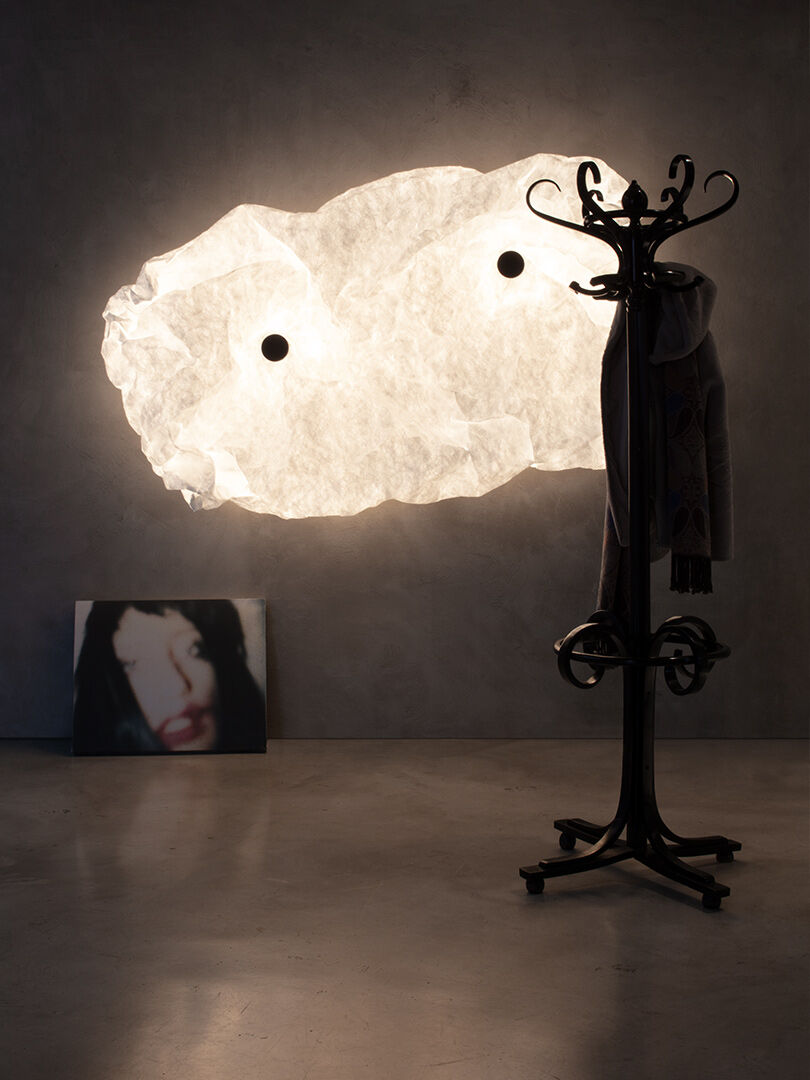


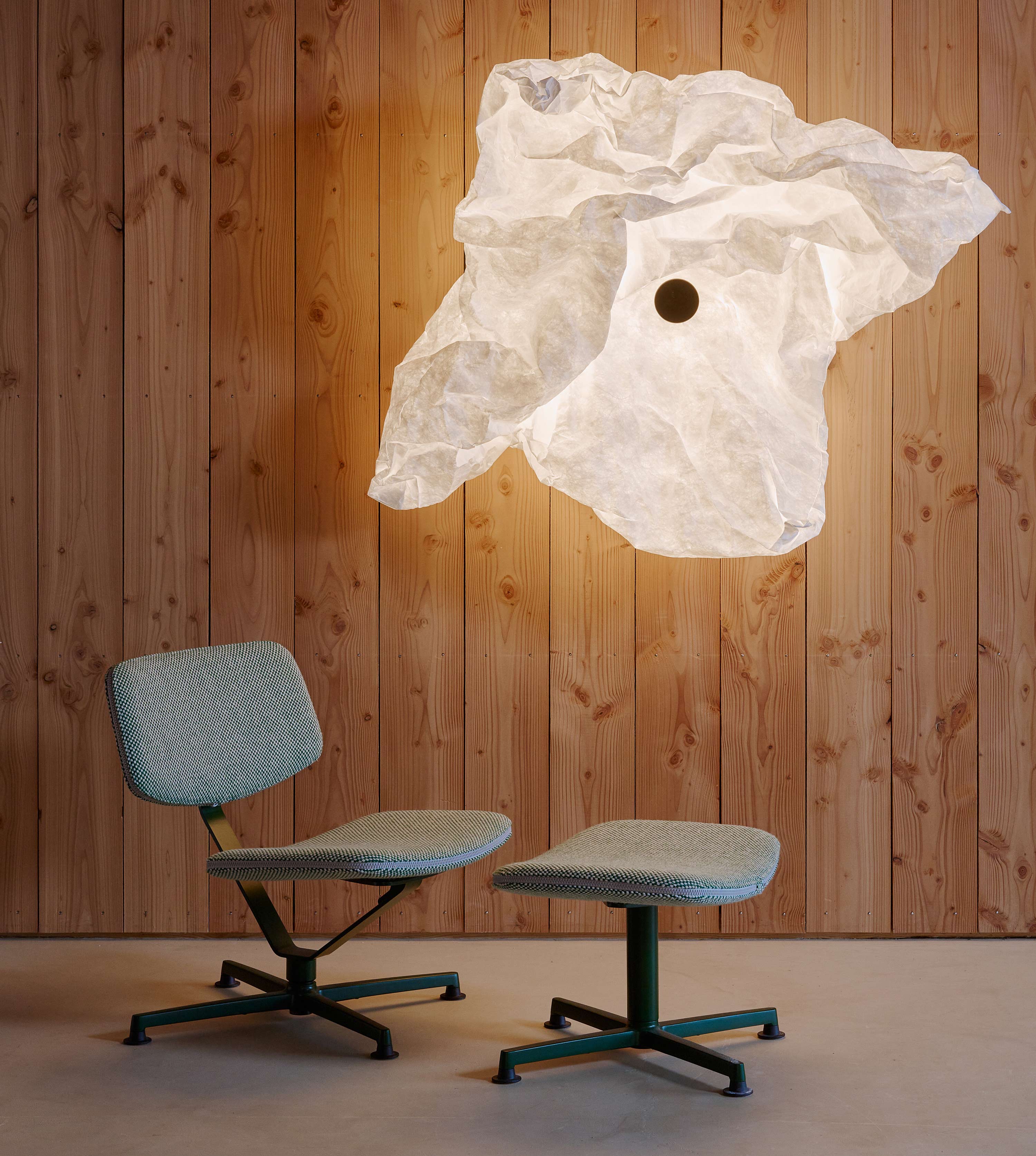
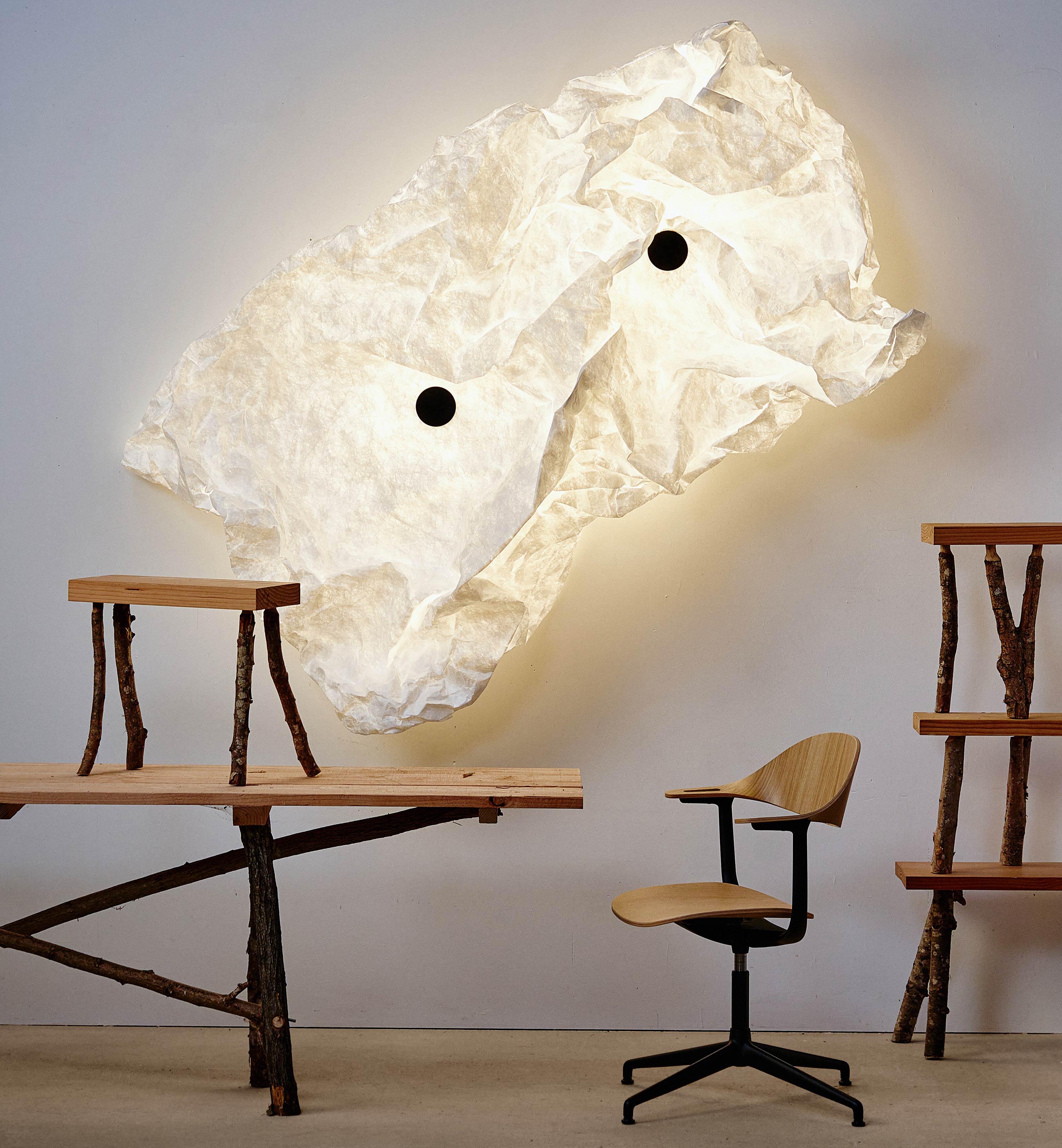
With Maap, designer Erwan Bouroullec realises a long-held ambition: to create a broad, immersive surface of light. The shape provides the starting point, yet each installation introduces a personal element of unpredictability, as the diffuser must be crumpled by hand, forming a microstructure that stabilises the lamp and brings it to life.


An alchemical wall installation
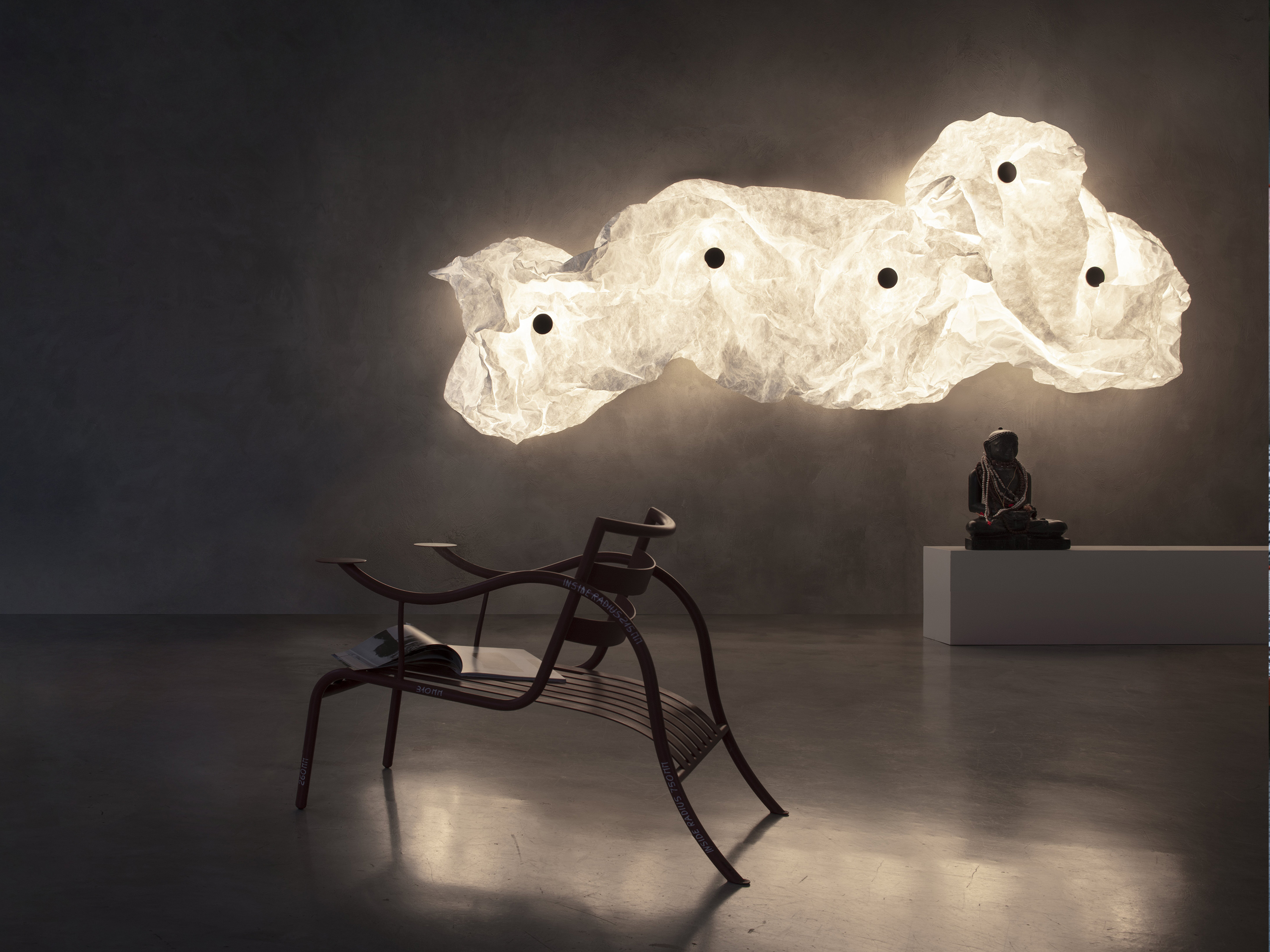
Maap is a generously sized wall lamp. It consists of a luminous element with four LED bulbs and a cross-shaped support that magnetically anchors the distinctive diffusive shell. The cover is available in three sizes (Wall 1, Wall 2, and Wall 3) depending on how many lighting units are mounted on the wall. At its maximum extension, Maap can span over 3 metres, transforming the wall into a luminous field.


Developed over an extended period, Maap resisted conventional materials and even traditional technical drawings. Bouroullec’s longstanding fascination with ultra-thin materials guided the process.
"Maap is the realization of a long-held desire to create expansive light sources that diffuse illumination across a broad surface. This results in a subtle, immersive glow that surrounds you, spreading softly and evenly."
ERWAN BOUROULLEC


When crumpled, the diffuser takes on unique, organic configurations. Each installation becomes distinct, shaped directly by the user’s hands. Lightness remained paramount, reflecting a conscious approach to material use.
The surface attaches to the metal “skeleton” through large magnetic buttons known as the Dots, positioned at the four light sources. These elements stabilise the shell while allowing endless reshaping.


A wall of organic, unpredictable light
Maap behaves like a large luminous cloud: light seems to emanate not from a single point, but from the entire surface. It fills the room with a soft radiance, creating an enveloping sensation that spreads gently and evenly through the space.
.jpg?sw=1600&bgcolor=FFFFFF)
.jpg?sw=20&bgcolor=FFFFFF)
Designed to be shaped
Rooted in a simple human gesture, Maap might equally be called Maak, as it draws from the primal human act of making. It responds to our innate inclination to create and to shape objects in response to their context. Embracing our attraction to free forms, it evokes endless interpretations, from map to landscape or even an enlarged cellular structure. It is the result of making: partly uncontrolled, instinctive and alive.